
Rat control
Rat Control and Removal in London
Scratching in the ceiling at night, droppings behind the bin, a burrow under the decking: rats are one of the most common pest problems in London homes and businesses. They carry disease, contaminate food and gnaw through wiring and pipes, and a single sighting usually means more nearby.
Diamond Pest Control is a family-run London team. We find out how the rats are getting in, treat them safely and proof the property so they don’t come back. We’re open 24/7, your call will always be answered, and our unmarked, 100% electric vans keep visits discreet. Call 020 8889 1036 or get a quote.
- 100% electric fleet
- Open 24/7 · your call will always be answered
- Unmarked vans for discretion
- £10 million public liability insurance
- Trustpilot: Excellent · 5.0 from 545 reviews
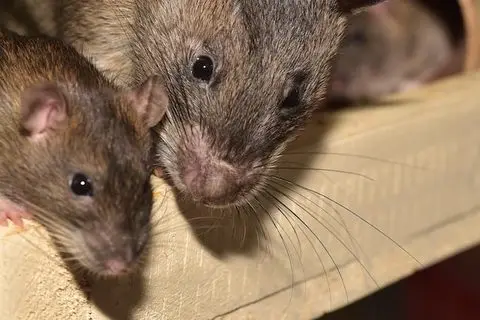
Signs you have rats
You often notice the signs before you see a rat.
Droppings
Droppings larger than a grain of rice, dark and capsule-shaped, often in groups along walls, behind appliances, in lofts or under sinks. Fresh ones are soft and shiny. Mouse droppings are much smaller. Read are rat droppings and urine dangerous?
Noises at night
Scratching, scurrying or gnawing in the loft, inside walls or under the floor, usually after dark when rats are most active.
Gnaw marks and damage
Rats’ teeth never stop growing, so they gnaw constantly: wood, plastic pipes, food packaging and electrical cables. Chewed cables are a fire risk.
A strong smell
An ammonia-like smell, strongest in enclosed spaces such as under kitchen units or in the loft.
Runs and smear marks
Rats use the same routes every night, leaving greasy dark smears along skirting boards, pipes and walls, and worn paths through grass.
Burrows in gardens and under decking
Holes of a few centimetres across, often next to walls, under sheds and decking, or in compost heaps.
Rats or mice? How to tell
Rats are much bigger than mice, with a thick body, a blunt nose and a tail that is shorter than the body. Mice are small and slender, with large ears and a tail about as long as the body. Rat droppings are far larger than the tiny, scattered pellets mice leave.
It matters because the treatment and the proofing are different: a mouse can get through a much smaller gap than a rat. If you’re not sure, send us a photo of the droppings when you call. Think it’s mice? See mouse control.
Why London has a rat problem
London gives rats everything they need. We don’t quote rat population figures here because most are estimates; what we see is the conditions that cause infestations:
- Victorian drains and sewers. Old, cracked or disused drain runs let rats travel underground and come up under homes. Read why are there rats in London’s sewers? and can pests come in through drains?
- Food waste. Bins, takeaways, bird feeders and compost all provide food.
- Terraces with shared voids. Roof spaces, under-floor voids and party walls connect houses, so rats move along a whole terrace.
- Building works. Excavation and drain work can disturb colonies and push them into neighbouring properties.
How we get rid of rats
Survey and finding the entry point
We start by working out where the rats are living, how they’re getting in and how far the problem has spread, inside and out.
Treatment options
We choose the treatment to suit the property and who lives there.
Drain problems
Many London rat problems start in the drains, and we carry out drain work as part of rat control, so the route in is dealt with as well as the rats.
Proofing
Treatment without proofing often means the rats return, so we carry out proofing to close the way in. Our treatments come with a guarantee.
Is it safe for children and pets?
Safety comes first in every home. Tell us about children and pets when you call, and we’ll plan the treatment around them and explain what we’ve done.
UK law also restricts how rodents can be controlled. Since 30 April 2024 it has been an offence in England to use a glue trap to catch a rodent without a licence, under the Glue Traps (Offences) Act 2022. Read are rodent glue traps legal in the UK?
Rat control for landlords and tenants
If you rent, who deals with rats depends on the tenancy and the cause. Where rats are getting in because of the building’s structure, drains or disrepair, it is usually the landlord’s responsibility. See Shelter’s guide to pests in rented homes and Citizens Advice on pests in rented homes.
Landlords and letting agents can call us too. Selling a property with a history of rats? Read selling a house if you have recurring rats.
Rat control for businesses
In a food business, a rat sighting can put your food hygiene rating and your reputation at risk, and environmental health officers will want to see that you are managing pests. Our vans are unmarked and fully electric, so customers won’t see a pest control logo outside. We offer monitoring contracts to catch problems early, and deal with drain-related rat problems. See commercial pest control.
DIY vs professional rat control
DIY can work for a single rat seen in a garden, if you remove food sources and set traps safely. It usually doesn’t work when rats are inside, when you hear them in the walls or loft, or when they keep coming back: that points to an entry route or a drain problem that shop-bought products won’t fix.
Poison misuse is the biggest risk. It can harm pets, children and wildlife, and rats that die in wall cavities leave a smell for weeks. Read we advise caution for DIY rat control.
How much does rat control cost?
The cost depends on the size of the property, how established the rats are, how many visits are needed, and whether proofing or drain work is required.
Ask for a quote and we’ll explain what affects the price. Get a quote.
Areas we cover
We provide rat control across London and the Home Counties. See all the areas we cover, or our local pages:
Reviews
What our customers say
Rated Excellent on Trustpilot: TrustScore 5.0 from 545 reviews. (Checked 21 October 2026.)
Read our reviews on TrustpilotRat control FAQs
How do I know if I have rats or mice?
Rats are bigger, with a blunt nose and a tail shorter than the body; their droppings are much larger than mouse droppings. If in doubt, send us a photo. See mouse control.
Will rats come back after treatment?
They can, if the way in isn’t closed. That’s why we combine treatment with proofing, and our treatments come with a guarantee.
Can rats come up through the toilet or drains?
Yes. Rats can swim and climb through damaged or old drain pipes, and broken drains are a common cause of rats under London homes. We carry out drain work as part of rat control. Read can pests come in through drains?
Are rats dangerous?
They can be. Rats can spread diseases including leptospirosis (Weil’s disease) through their urine, and contaminate food and surfaces. Read are rat droppings and urine dangerous?
Is my landlord responsible for rats?
Often, if the rats are getting in through the structure, drains or disrepair. See Shelter’s guide.
Does the council deal with rats in London?
Many London boroughs offer a paid rat treatment, usually booked on weekdays. See the areas we cover for links to local council pages.
Can you come out tonight?
We’re open 24/7 and your call will always be answered. We don’t promise a set response time; call 020 8889 1036 and we’ll tell you honestly when we can attend. See emergency pest control.
Read more about rats
Need rats control fast? Call our London team today.